
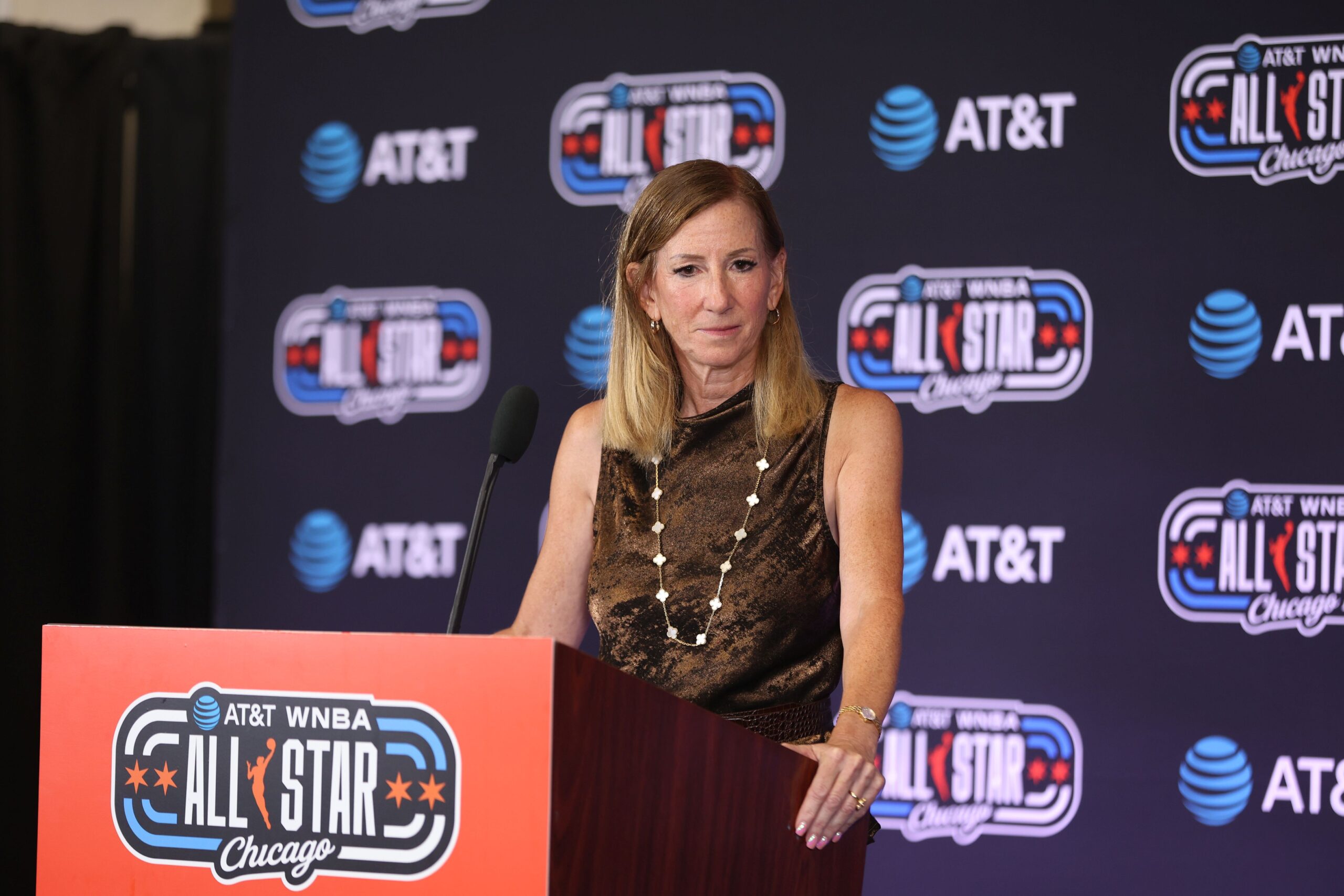

On September 4th, Cathy Engelbert, Commissioner of the Women’s National Basketball Association (WNBA), announced the end of her seven-year tenure, effective in December 2026.
“After more than seven years at the WNBA and more than 40 total years in business,” Engelbert said, “I have made the decision to retire as WNBA Commissioner.”
Appointed in 2019 as the WNBA’s first commissioner, Engelbert oversaw a period of increased visibility and commercial growth for women’s basketball. According to Sports Business Journal, the WNBA averaged 771,000 viewers per regular-season game across national networks in 2026. This marked a 17% increase from the previous year and its highest average viewership since 2000.
Despite the WNBA’s growth, Engelbert’s tenure was also marked by criticism from players who questioned whether their concerns were receiving as much attention and prioritisation as the league’s prosperity.
In September 2024, the rivalry between rookie stars Caitlin Clark and Angel Reese attracted national attention, bringing new viewers to the league. However, the attention also coincided with an influx of racist and misogynistic abuse directed at WNBA players. When asked about the hostility surrounding the rivalry, Engelbert emphasized its commercial benefits and compared Clark and Reese’s popularity to the rivalry between NBA legends Larry Bird and Magic Johnson, highlighting how rivalries attract viewers. She then advised players to ignore negative comments on social media.
Engelbert’s response drew criticism from players who argued that the league needed to directly condemn the abuse rather than focusing on its commercial benefits. Breanna Stewart, a New York Liberty forward and Women’s National Basketball Player Association (WNBPA) vice president, criticized Engelbert for not using her platform more effectively, urging Engelbert to tell fans that “enough is enough.”
Engelbert later clarified her point on social media, stating “To be clear, there is absolutely no place for hate or racism of any kind in the WNBA or anywhere else.”
More tensions surfaced in September 2025, when Napheesa Collier – Minnesota Lynx star and a vice president of the WNBPA – criticized the league’s leadership after the season ended, raising concerns about officiating, player safety, compensation and the league’s treatment of players.
“We have the best players in the world,” Collier said. “We have the best fans in the world, but right now, we have the worst leadership in the world.”
Shortly after, Engelbert disputed parts of Collier’s account but acknowledged that the league needed to do better if players didn’t feel valued. Their disagreement showed a growing divide between the WNBA’s business-related success and players’ experiences with its leadership.
Tensions between Engelbert and the WNBA continued during negotiations over a new Collective Bargaining Agreement (CBA), which is the contract that governs players’ salaries, benefits and working conditions. As the league grew financially, players pushed for higher pay, better travel conditions and improved gym facilities. By December 2025, 98% of players who voted authorized the WNBPA executive committee to call a strike if necessary, demonstrating their willingness to take collective action.
In a joint interview with ESPN, Collier and WNBPA president Nneka Ogwumike emphasized that players wanted to be “well-represented and valued” in the new agreement. Collier also criticized the tone of the negotiations, calling the response from the league “very dismissive, very disrespectful.” After 17 months of negotiations, which left players and fans uncertain about whether the 2026 season would start, both sides reached a new seven-year agreement on May 22nd, 2026.
The deal introduced a new revenue-sharing system and raised the salary cap from $1.5 million in 2025 to $7 million in 2026. More than $1 billion in player salaries and benefits were projected over the agreement’s duration. The new deal marked a major financial milestone, but the prolonged negotiations demonstrated how passionate players were about wanting a greater share of the league’s growth and a voice in decisions affecting their work.
In a WNBA press release announcing the new CBA, Ogwumike said “We’ve always believed that as this league grows, the players who power it must grow with it, and we’re proud to see that belief shared.”
While Engelbert left behind a WNBA that is more visible and financially successful than when she first took over in 2019, criticism from star players showed that commercial growth alone can’t define the league’s success. The next commissioner must build on the momentum while earning the trust of the athletes who make the league possible.