
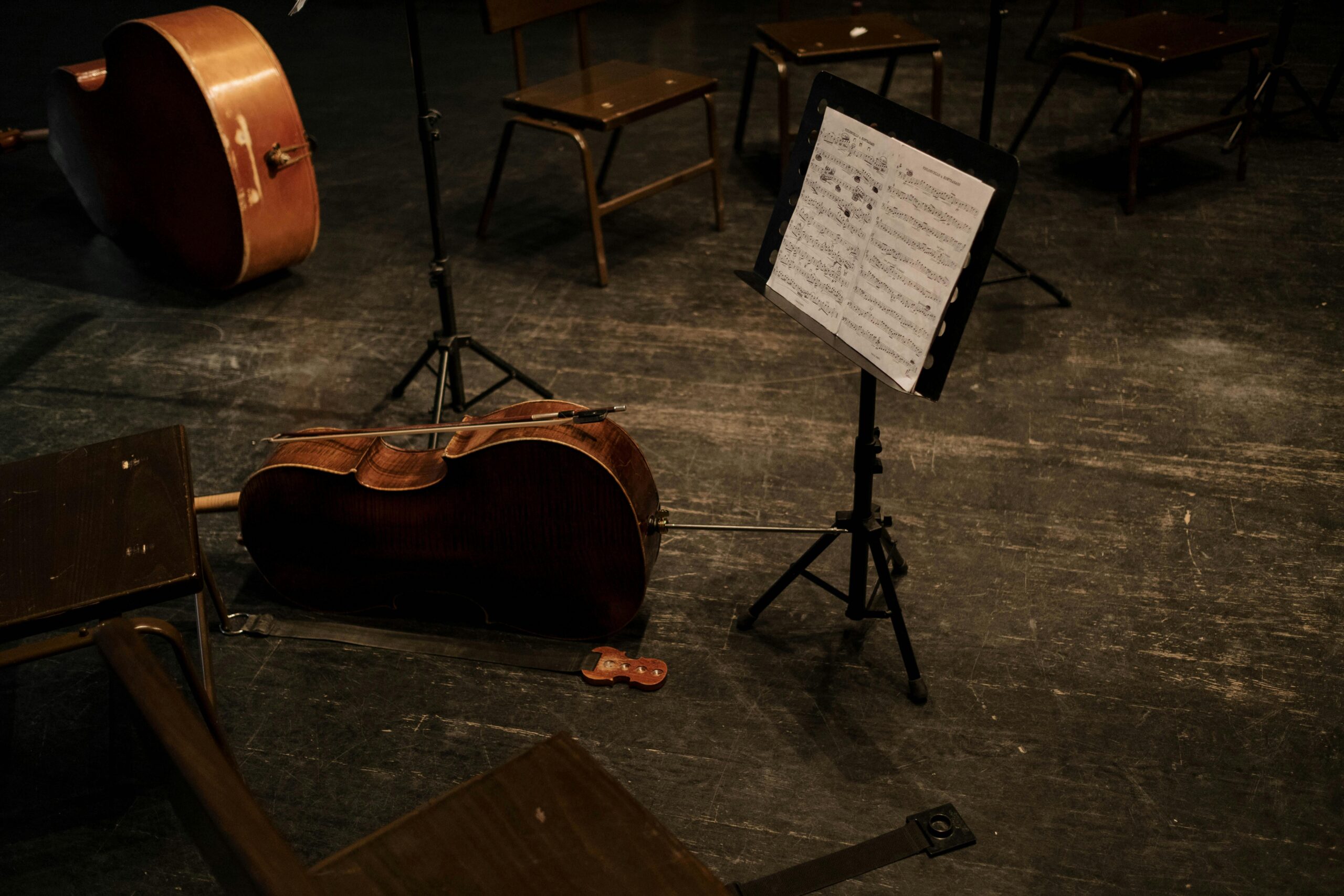

On November 12th, The Aaron Copland School of Music presented its second concert of the season in LeFrak Concert Hall, led by conductor Dr. Yoon Sang Timothy Cho. The evening featured a program spanning Mendelssohn, Rachmaninoff and Mozart.
The orchestra opened with Felix Mendelssohn’s “String Symphony No. 13 in C minor”, followed by Sergei Rachmaninoff’s “Symphony in D minor”, often referred to as the “Youth” Symphony. The concert concluded with one of Mozart’s most iconic works, the “Symphony No. 40 in G minor, K. 550”.
This performance marks the orchestra’s second concert under Dr. Cho’s direction, and the Queens College Orchestra continues to demonstrate impressive professionalism. It is worth noting that the musicians delivered these demanding works with remarkable musicality, especially considering they had only five weeks to prepare the repertoire while juggling full-time studies.
I would never claim that the Queens College Orchestra is the Vienna Philharmonic. There were the occasional notes that stretched a little too long, and wavery intonation–if you’re a musician, you’ll definitely narrow it down to a couple of options–marred a few sections. But that is also the nature of a student orchestra, where players range from first-year undergraduates to graduate students finishing their master’s degrees. What matters and what came through powerfully, is that this ensemble is growing, ambitious, and capable of delivering genuinely moving performances.
The concert opened with Mendelssohn’s “String Symphony No. 13 in C minor”, the last of the thirteen string symphonies he composed between the ages of twelve and fourteen. Knowing this, it is always astonishing to hear the level of craft in these works, and the QCO captured the piece’s energetic intensity from the very first chords. The influence of Bach is unmistakable in the fugal writing that threads through the symphony, and the ensemble handled those fast, interlocking passages with precision and confidence. It was an exciting way to begin the program and a reminder of how much the string section has developed over recent years.
The stage expanded for the next work, Rachmaninoff’s “Youth Symphony in D minor,” bringing in winds, brass, and percussion. As noted in the official program notes by Anya Owens, only one movement of this early symphony survives, yet it already shows the blend of darkness and lyricism that would later define Rachmaninoff’s mature style. The opening, led by the lower strings, set a somber atmosphere, but brief flashes of light emerged as melodies passed between cellos, violins, and winds. The orchestra’s string sound was warm and focused, and the solo lines for instruments like the flute and oboe were played with clarity and sensitivity. While Rachmaninoff himself later criticized this early work, hearing it performed by musicians roughly the age he was when he composed it added a meaningful layer to the experience.
The concert concluded with Mozart’s famous “Symphony No. 40 in G minor.” Under Dr. Cho’s direction, the QCO conveyed the work’s iconic phrasing and restless energy with conviction. As a player, I don’t find this symphony difficult because of its notes, but rather because of the delicate balance required between all the instrument families. Achieving a unified sound across the entire ensemble is the true challenge and the orchestra managed this admirably. Of course, there are always details that can improve, but for a student orchestra, the QCO is clearly on a strong and promising path.
As a long-time member of this orchestra—now in my fourth year—I’m genuinely proud of how much the ensemble has grown, and I’m excited to see where it will go under Dr. Cho’s leadership. If you’ve made it this far, consider this your invitation to be part of that journey. You might even witness a future star onstage. The QCO’s next concert will take place on December 9th, featuring soloist Eunkyeong Chun performing a rendition of Dvořák’s iconic Cello Concerto. It’s one you won’t want to miss.