

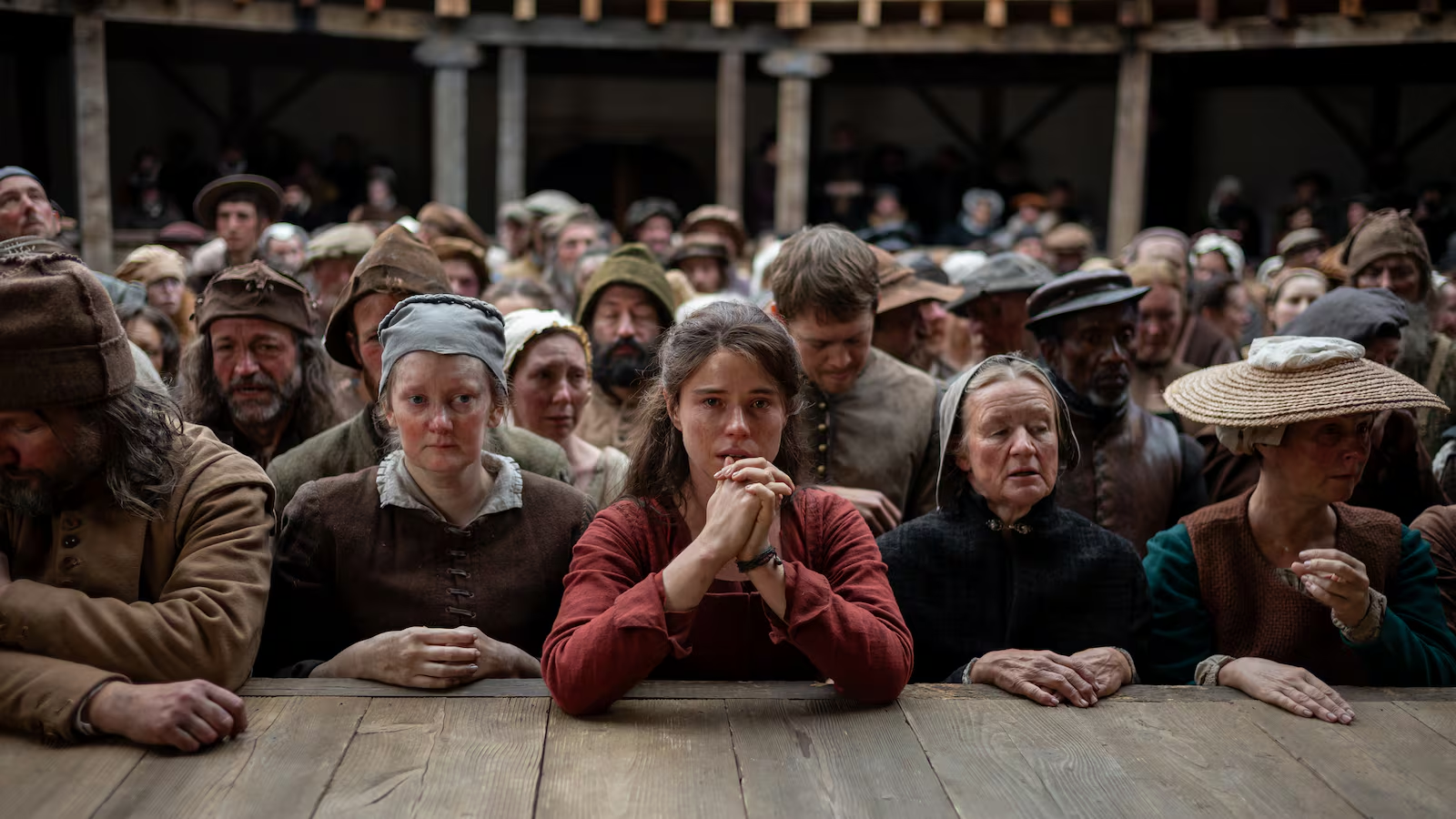

Hamnet takes a familiar historical figure and tells a much quieter story. Directed by Chloé Zhao and based on Maggie O’Farrell’s novel, the film looks at the death of William Shakespeare’s young son and how that loss shapes the family left behind. Instead of focusing on Shakespeare’s career or legacy, the film stays grounded in domestic life and emotional fallout.
The story is set in late sixteenth century England, mostly in Stratford, where Agnes lives with her children while her husband spends long periods away in London working in the theater. The film opens with scenes of everyday routine. The children play. Meals are prepared. Agnes gathers plants outside the home. These moments are simple, but they help establish a sense of stability before illness disrupts the family.
When Hamnet becomes sick, the film avoids dramatizing the moment. There is no clear explanation for what happens and no attempt to soften the outcome. The lack of control reflects the reality of the time and makes the loss feel more unsettling. The film allows the audience to sit with that discomfort rather than pushing toward resolution.
In the center of the film with his breakout role as Hamnet, is child actor Jacobi Jupe. He is able to channel complex emotions while embodying the character. In a Variety Events interview, the 12 year old says, “playing Hamnet was life changing and so spiritual.”
Jessie Buckley’s performance as Agnes stands out. Her grief is restrained and internal, showing up in quiet moments rather than big reactions. Agnes is portrayed as deeply connected to her children, and the film keeps her at the center of the story.
In a New York Times Interview, Director Chloe Zhao talking about Buckley said, “When she let out that very guttural scream of grief [in the scene of Hamnet’s death], that was not planned. But I believe it didn’t just come from her; it came from the collective. When that happens, it’s the most exciting thing for me as a director, because there is no way any of us could have thought of that. That is truth happening in the moment.”
Paul Mescal plays William Shakespeare with a reserved presence. His distance, especially after Hamnet’s death, creates tension between the couple and highlights how differently they respond to grief.
Visually, Hamnet keeps things natural. The lighting is soft and realistic, often relying on daylight or candles. Homes look worn and lived in, and the setting feels cold and isolated at times. The film does not try to romanticize the past, which helps the story feel grounded.
The pacing is slow, and the film prioritizes mood over plot. Some scenes linger longer than expected, focusing on emotional weight rather than movement. This may not work for every viewer, but it fits the subject matter. Grief is not quick or linear, and the film reflects that.
The connection between Hamnet’s death and the creation of Hamlet is present but subtle. The film does not suggest that art solves loss. Instead, it shows how pain can carry forward and change people over time. This choice keeps the ending from feeling forced or overly symbolic. Hamnet is not an easy watch, but it is a thoughtful one. It strips away the myth surrounding Shakespeare and focuses on the human cost behind his work. For viewers interested in character driven films and slower storytelling, Hamnet offers a moving look at love, loss, and family.