
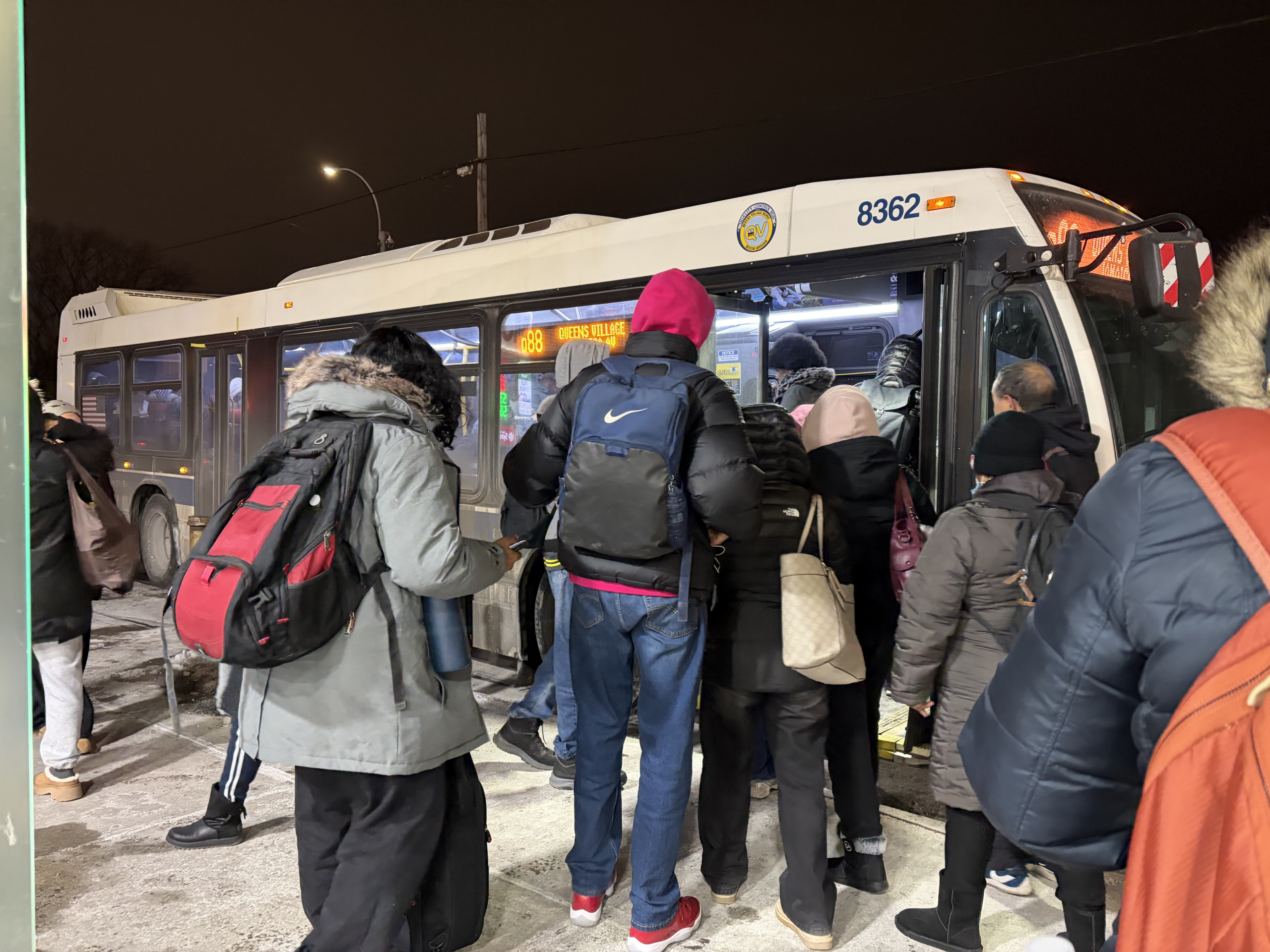

40 minutes of waiting. Negative degree weather. The bus finally arrives. As Queens College students boarded it, they saw a small sticker pasted on the side: “Bus Fare: $3.00.” That 10¢ increase from the previous $2.90 fare was a slap to their frozen faces.
On January 4th, 2026, the Metropolitan Transportation Authority (MTA) raised the bus and subway fare to $3.00. This should bring in another $130 million in revenue, and potentially an additional $44 million through 440 million more annual bus trips, according to Jano Leiber in an interview with Spectrum News. The MTA claims this increase is to keep up with inflation and improve service, but QC students have varying opinions on MTA service.
“When the buses finally arrive, they are packed, and you can barely get a seat, which is very irritating after a long, tiring day of classes,” said Gretchen, a second-year Neuroscience major.
Gretchen frequently rides the Q88 bus to get to campus and says her experience with the MTA is 50/50. “I have had many kind bus drivers who work hard to get us to places on time as fast as they can. However, I have also had numerous experiences where I find myself waiting up to half an hour for the bus.”
The recent January snowstorm made things worse for the MTA. Notifications on MTA buses read that certain routes are running with delays. Problems with crowding are exasperated when delayed buses do arrive. This is especially difficult for buses like the Q88 and Q17 which serve multiple schools. QC shares certain routes with John Bowne High School, which means riders end up competing for space on the bus.
Too many people plus delayed buses equals a recipe for unhappy riders, Gretchen being one of them.
“The constant increase in fare is upsetting because it doesn’t feel like the MTA is properly using these funds to improve its services.”
Despite differing viewpoints on the increased fare, MTA CEO Janno Lieber defends the new prices in his interview with Spectrum News:
“In the last ten years, we have raised the fare 9%—the base fare. General inflation has been 31%.” Later in the interview, he said, “We’re less than a third of what general inflation is.”
Leiber continued to explain that much of the fare goes to pay the workers and maintain costs. Lieber also states that crime is down by 14% compared to crime rates during the COVID-19 pandemic. Credit where it’s due, the MTA has certainly managed to stay below the surging inflation rates.
However, while it’s great that the MTA is beating inflation, students aren’t. The cost of living has gone up. This increased fare makes it worse.
Even if the $3 increase improves the MTA by every metric, it still raised the fare by 3.5%. That small jump adds up. Students riding the bus twice a day for the 70 days in this semester would now be paying $420 compared to the former $406 under the $2.90 fare. This is not to mention students who make multiple subway and bus transfers. For them, the costs keep rising.
Students impacted by the rise in fare can take some steps to ease the burden. First, students can apply for the Fair Fares NYC program. This program helps low-income students by reducing their fare by 50%. Second, QC students can apply for a Student Emergency Grant, which gives students a one-time maximum sum of $3,000 which can be used for transportation and a multitude of other purposes.
Students interested in making their voices heard and taking direct action can consider joining QC’s New York Public Interest Research Group (NYPIRG) in Albany on February 25th. NYPIRG plans to advocate for free student OMNY cards.
While students can’t control the MTA board’s actions, they can make their voices heard and advocate for better transit options.