

On November 5th last year, Commonpoint Queens and the Queens College Hillel partnered up in the Stories to Remember, a campus event to honor the stories of Holocaust survivors. Queens College alum Judith Gross told her remarkable story of survival.
January 27th marked International Holocaust Remembrance Day, established by the UN in 2005 in memory of the victims of the Holocaust, 81 years after the liberation of the Auschwitz Birkenau German Nazi Concentration and Death Camp. The Stories to Remember event demonstrated Queens College’s place within that international mission. Gross represents one voice among many in the QC community whose lives were affected by the horrors of the Holocaust.
Judith Gross was born on September 28th, 1943 to Magdolna Grosz and Sandor Krakovits in Budapest, Hungary. Gross spent her early life living in property owned by Swedish diplomat Raoul Wallenberg, who offered a temporary sanctuary protected by Swedish flags, a sign of neutral territory.
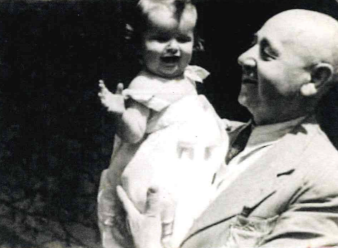
Gross was thirteen months old when she was separated from her mother for the first time, and she would not return from Lichtenworth, a concentration camp in Austria, until nine months later. Her biological father was taken to a labor camp earlier in the war and never returned. Gross was left in the care of her maternal grandparents, whom she recalls raised her.
“As far as food, we didn’t get any food,” said Gross in a document provided to The Knight News from Commonpoint Queens’ “Bearing Witness” booklet. Gross’s milk supply came from a generous neighbor who owned a milk farm. They would pass any leftover milk through a window of the family’s home. This secret milk supply kept the “golden haired princess” as Gross’ grandfather called her, alive while her mother was away.
The story of Judith Gross manifested into a lifelong journey of advocacy, something she brought to the Commonpoint community.
The Knight News reached out to Commonpoint and spoke to Sally Bruhim, Program Coordinator of the Community Initiative for Holocaust Survivors. “The group wanted to share their story with younger generations and the greater community to express their beliefs of tolerance, kindness and inclusion,” explained Bruhim.
Bruhim shared that while they have lost some survivors, their messages live on. “As survivors age, they are aware that they have a limited time in sharing their story and educating the community about the Holocaust and their vision of a united community,” she added.
Judith Gross emphasized the responsibility of the living and their voice. “I am here to bear witness that their life mattered and people should know about them. I am speaking for a lot of people who have no voice anymore,” emphasized Gross. Her distinction of having been a one-year-old and relying off of what she was told remains important as Judy sees herself as a survivor who lived through the lifelong impacts of the broken connections and undeniable history.
When asked what the word ‘survivor’ means to her, she responded: “I see myself as a Wallenberg survivor because I owe my life to Raoul Wallenberg.”
Judy describes the love of her adoptive father, Nándor, which molded her. Judy was twelve when she learned that Nándor was not her biological father, but it strengthened their bond. Nándor was a survivor too, he lost his wife and two children in the gas chambers at Auschwitz. Judy recalls the solemn promise Nándor made to be “better than a real father” to Judy, the very love and loyalty that was stolen from his own children and wife. “I was the spitting image of his daughter at the age of four” stated Gross. There was a blessing in this connection, a father who had lost everything found a purpose in the one-year-old who held light and tragedy in her soul. Eventually, Judy named her son after the brother she never met, honoring the father who chose to love her.
Later, Judy relocated to the USA in 1965 where she married her husband, Gabor and raised their son, Robert. She attended Queens College, recalling taking a Calculus class 40 years ago and feeling proud about passing with an A-, in a statement made to The Knight News.
Today, Judith Gross is not a silent infant in a brutal regime. She has become a guardian of history and a voice for those who cannot speak, serving as a model of resilience and courage.