
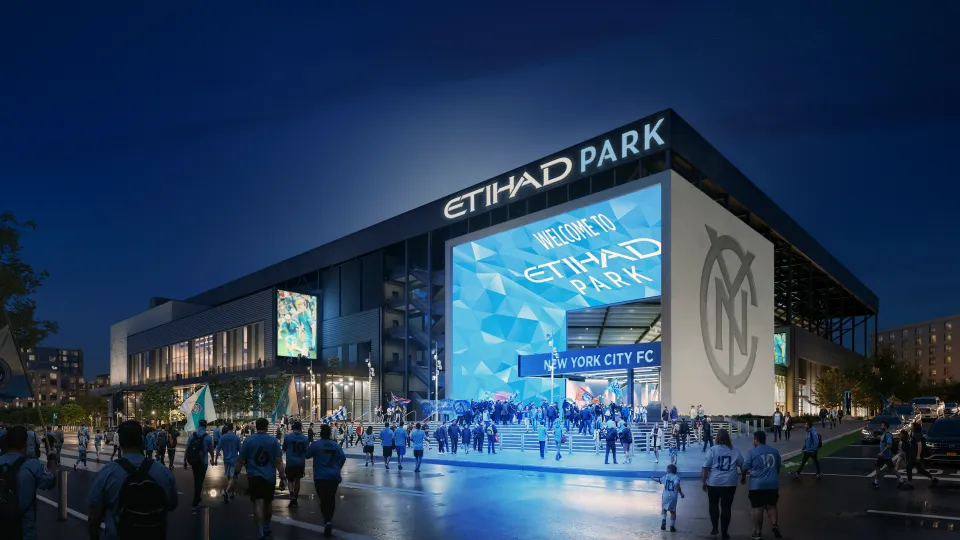

After years of uncertainty, delays, and temporary homes, The New York City Football Club (NYCFC) is finally moving closer to opening the doors to Etihad Park, the club’s long-awaited stadium in Queens.
Earlier this month, new construction updates showed major visible progress at the Willets Point site, giving fans a clearer look at what has long felt like a distant promise. Just weeks later, it was reported by The New York Post that NYCFC plans to begin playing in the new stadium in the summer of 2027, signaling that the club’s permanent home is now more tangible than ever.
For years, NYCFC has existed in a strange position compared to other Major League Soccer clubs. While the team has built a successful identity on the field and developed a loyal fan base, it has never had a true stadium of its own. Instead, the club has had to bounce between Yankee Stadium and Citi Field, an arrangement that often felt inconvenient for supporters. The lack of a permanent venue has followed NYCFC since its founding, making the development of Etihad Park one of the most important projects in club history.
A construction update published Feb. 3rd, 2026 showed that the stadium’s steel structure was actively rising, with the venue beginning to take shape in a much more visible way. For fans who have waited years to see real movement, that update was significant. Stadium projects can often feel abstract when they are discussed only through renderings and official announcements, but seeing the structure go up above ground made this one feel real. It was one of the clearest signs yet that NYCFC is moving beyond the planning phase and into something much more concrete.
The projected opening in the summer of 2027 lines up with Major League Soccer’s shift to a new competition calendar, which is expected to begin with the 2027-28 season. Until then, the club is expected to continue playing home matches at Yankee Stadium and Citi Field. While that means fans still have more waiting to do, the announcement at least gave them something they have not always had during this process: a real target.
The importance of Etihad Park goes beyond the club itself. The stadium is expected to be a major part of the larger redevelopment of Willets Point, an area that has long been viewed as a space with major potential in Queens. The previously mentioned report has described the project as a $780 million stadium with a capacity of 25,000 seats, making it one of the most notable new sports developments in New York City. It will also add to the already growing concentration of major sports venues in Queens, alongside Citi Field and the (United States Tennis Association) USTA Billie Jean King National Tennis Center.
That alone makes the project notable, but for NYCFC supporters, the emotional significance may matter even more. A permanent home offers the club something it has never fully had: stability. It also gives supporters a place that is unmistakably theirs, rather than one that is borrowed.
This matters in soccer culture, where stadium identity, supporter sections, and atmosphere are often central to the fan experience. A club without its own stadium can still succeed, but it can be harder to establish a lasting sense of place. Etihad Park is expected to change that.
Of course, major development projects are never viewed in a completely simple way. A new stadium can bring energy, further investment, and attention to an area, but it can also raise questions about the long-term effects on the surrounding community. As Willets Point continues to change, there will likely be ongoing conversations about who benefits most from this transformation. Even so, from a sports perspective, the project represents a major turning point for both NYCFC and Queens.
For a borough that is often overlooked in conversations about the city’s sports identity, Etihad Park could become a major symbol of Queens’ place in New York athletics. Rather than being seen only as the home of existing venues, Queens may soon be home to one of the city’s newest and most distinctive stadiums. That alone gives the project a different level of meaning.
After years of waiting, NYCFC’s permanent home is no longer just an idea or a concept image. It is physically rising in Queens, and the club now has a timeline for when it expects to play there. There is still work to be done before the stadium is finished, but the direction is finally clear. For NYCFC and its supporters, Etihad Park is beginning to look less like a dream and more like the beginning of a new era.